Sell a house in Oakland and a cracked sewer lateral has a price tag before anyone opens escrow. EBMUD's Regional Private Sewer Lateral Program requires a Compliance Certificate at the point of sale, and if a seller can't finish the repair in time, the fallback is a defined one: a Time Extension Certificate, a $4,500 refundable deposit, and 180 days on a clock EBMUD starts for you. The deposit comes back once the lateral passes.
Sell a house in Walnut Creek and none of that exists. Central Contra Costa Sanitary District, the agency that collects and treats wastewater for Walnut Creek along with Lafayette and Pleasant Hill, states on its own FAQ page that it does not have a point of sale sewer lateral inspection ordinance. An inspection is encouraged before a sale. It is not required. No certificate to chase, no deposit to post, no district-run clock.
That sounds like Walnut Creek sellers dodged a bureaucratic headache their Oakland counterparts didn't. They didn't dodge anything. They moved the same risk into a place with no fixed price and no fixed deadline: the buyer's inspection contingency.
The Rule That Doesn't Apply Here
A sewer lateral is the pipe that carries wastewater from a house to the public main, usually running under the yard, the driveway, and the sidewalk. Central San is explicit that the property owner is responsible for the entire run, from the house to the connection point, including the section beneath the street. The district doesn't own it, doesn't inspect it on a schedule, and doesn't ask to see proof it works before a deed changes hands.
That's a genuinely different posture from several of the district's East Bay neighbors. Castro Valley Sanitary District requires a valid Sewer Lateral Inspection Exemption Certificate before every close of escrow, a rule that's been in effect since July 1, 2019. EBMUD's program covers Oakland, Alameda, Albany, Emeryville, Piedmont, El Cerrito, Kensington, and the Richmond Annex, with a sale as one of the standard triggers. Central San simply isn't built that way. A house can change hands in Walnut Creek with a failing 70-year-old clay lateral and no agency will have flagged it before the buyer moves in.
Three Sewer Districts, Three Very Different Weeks Before Closing
The absence of a rule in Walnut Creek only looks like good news until you set it next to what a comparable sale looks like a few exits down the freeway.
| Central San (Walnut Creek, Lafayette, Pleasant Hill) | EBMUD Regional PSL Program (Oakland, Alameda, Albany, and others) | Castro Valley Sanitary District | |
|---|---|---|---|
| Certificate required at sale | No | Yes | Yes, since July 1, 2019 |
| Inspection cost | Not mandated | Contractor-dependent | $330 through the permit portal |
| If the pipe fails | Negotiated privately in escrow | Time Extension Certificate: $4,500 refundable deposit, 180 days to finish | Notice to Repair issued within 30 days |
| Certificate validity once passed | N/A | Valid up to 20 years | Valid 10 years |
The Central San column isn't empty because Walnut Creek's pipes are newer or better maintained. It's empty because the district chose not to build a compliance process. Everything a certificate program would normally settle in advance, condition, cost, and timeline, gets settled instead during a private negotiation with a defined contingency deadline and an undefined price.
Why the Older Tracts Carry the Real Exposure
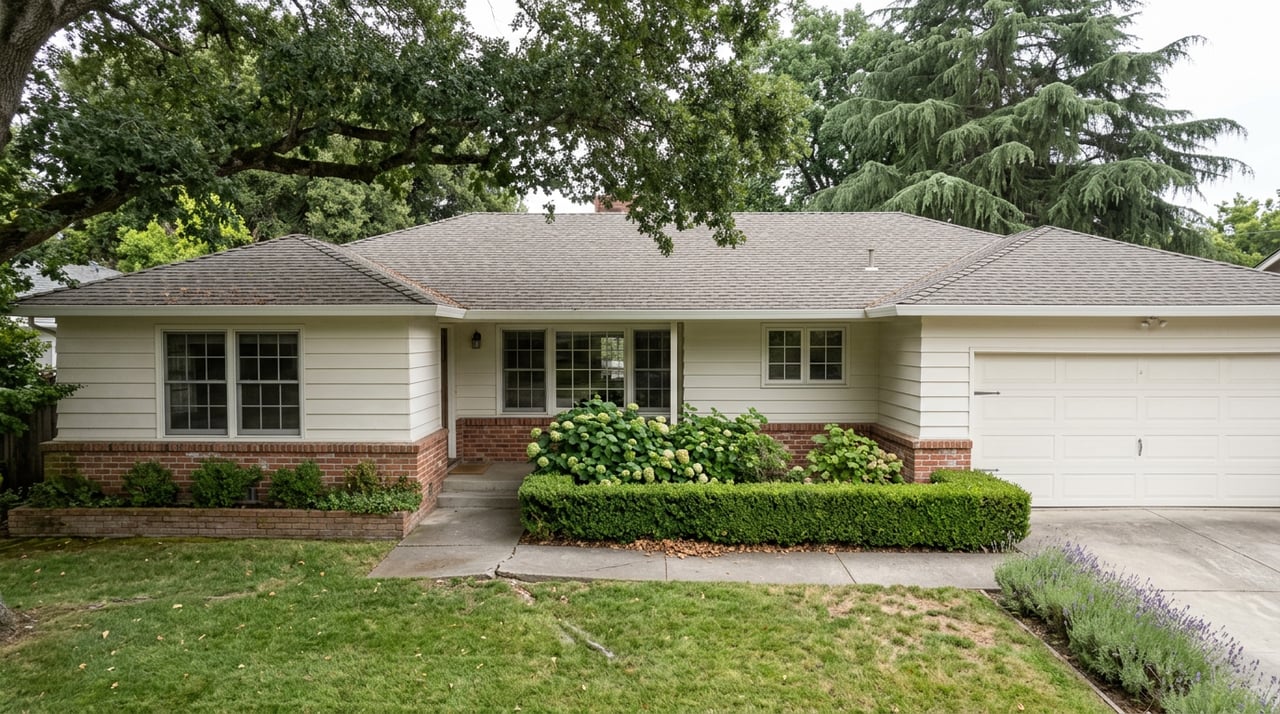
Walnut Creek's housing stock didn't arrive all at once, and the sewer lateral question isn't evenly distributed across it. Parkmead traces back to 1948, its mid-century ranch homes lining streets that were platted before trenchless repair technology existed. Rancho San Miguel holds one of the East Bay's larger concentrations of Eichler homes, built through the 1950s. Walnut Heights and Tice Valley filled in with post-war ranch tracts through the 1950s and into the 1960s, and Saranap, technically unincorporated but carrying a Walnut Creek address, adds its own stock of older character homes on larger lots to the mix.
A lateral installed during that first wave of development has had seventy-plus years in ground that shifts with the seasons. Central San's own approved materials list for replacement work includes PVC, ABS, cast iron, ductile iron, and HDPE for pipe bursting, a list that exists precisely because so much of what's already in the ground predates all of those options. Age alone doesn't guarantee a failed inspection. It does mean the odds move in one direction the longer a clay or cast iron line has sat undisturbed.
A few signs tend to show up before a buyer's inspector finds the problem for you:
- Chronic clogs or backups that keep returning despite routine clearing
- Large trees near the lateral's likely path, since roots are drawn to the moisture inside an aging pipe
- A noticeable dip or soft spot in the lawn, which can mean the ground above a leaking section has started to settle
- A lateral that's never been touched since the house was built, with no permit history on file
None of these trigger a district requirement in Central San's territory. All of them are exactly what a buyer's sewer scope, run during a standard inspection contingency, is designed to catch.
The One Financing Tool Central San Actually Offers
Central San doesn't run a compliance certificate program, but it does run something a seller in an older tract can use before that inspection ever happens. The district's Sewer Lateral Replacement Financing Program lets a single-family homeowner with a standard 4-inch connection finance up to $12,500 toward replacement costs, repaid over 15 years through the Contra Costa County property tax roll rather than paid out of pocket all at once. Multi-family and non-residential customers with a 6-inch connection can finance up to $25,000 under the same program.
Central San resets the program's terms every July, tied to its fiscal year. Anyone weighing this option should confirm current numbers directly with the district's Sewer Financing Coordinator rather than assume last year's figures still hold, since the window and terms are set annually rather than fixed for good.
The math is worth sitting with. A seller who finances the repair ahead of listing turns an unknown, negotiated cost into a known, financed one, and does it on a timeline they control rather than one dictated by a buyer's contingency deadline. A seller who waits is betting that either the lateral passes an inspection nobody required, or that a buyer's credit request lands somewhere close to what the repair would have cost anyway. Sometimes it does. The point of Central San's silence on this is that nothing forces that number to be predictable.
What This Means the Week You List
A Parkmead or Rancho San Miguel seller isn't required to do anything about the lateral before putting a house on the market. Nothing in Central San's code compels a pre-listing inspection, and nothing about listing without one is improper. But treating "not required" as "not relevant" tends to be where the surprise shows up, usually during a tight contingency window when a buyer's inspector has just found a problem and there's no district fee schedule to anchor the conversation.
The seller who comes out ahead in Central San's territory generally isn't the one who prices assuming the lateral is fine. It's the one who's already run the camera, already knows what the pipe looks like, and already knows whether the financing program or a straightforward repair makes more sense before a buyer's report turns it into a negotiation with no fixed floor.
A Few Questions Walnut Creek Sellers Ask
Is a sewer lateral inspection legally required before I sell in Walnut Creek? It isn't. Central San's own FAQ page addresses this directly: no point of sale ordinance exists in its service area, and while the district encourages an inspection before a sale, nothing compels one.
If my lateral fails a buyer's inspection, is there a standard process for who pays? Not from the district. Central San has no certificate program and no fee schedule for this situation, which means the repair or credit gets worked out inside the purchase contract, with whatever timeline the contingency period allows.
Can I use Central San's financing program even if I'm planning to sell soon? The program finances up to $12,500 for a standard single-family connection, repaid over 15 years through the property tax roll, with terms that reset every July. Anyone considering this close to a planned sale should confirm current terms with Central San's Sewer Financing Coordinator before assuming the numbers or repayment structure will work the same way relative to a sale timeline.
If you're weighing a listing in Parkmead, Walnut Heights, Saranap, or any of Walnut Creek's older neighborhoods and want a clear-eyed read on what a buyer's inspection is likely to surface, The Beaubelle Group can walk through the specific condition of your property before it ever reaches a contingency period. Request a Complimentary Home Valuation to start that conversation.