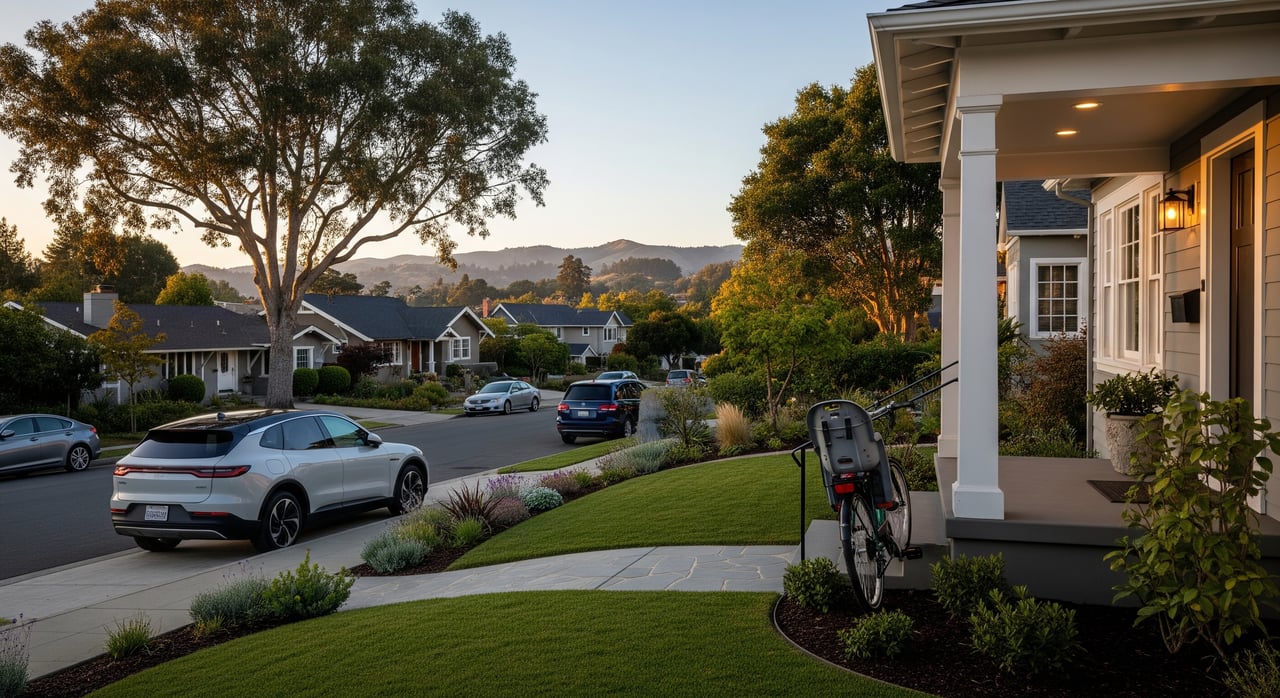
Thinking about a move that makes your weekday commute easier without giving up a calm, suburban feel? Pleasant Hill often hits that sweet spot for East Bay families who want BART access, I‑680 convenience, and neighborhoods built around single‑family homes. In this guide, you’ll see how Pleasant Hill stacks up for transit, schools, parks, and the micro‑areas that tend to work best for commuters and growing households. You’ll also get a simple checklist to compare options with confidence. Let’s dive in.
Commute options that work
BART access and reliability
If you want a transit-first commute, Pleasant Hill / Contra Costa Centre is the city’s primary BART station. Trains offer frequent service into central Oakland with direct service into San Francisco. Always confirm current lines and peak frequencies on the official BART site. For station amenities, parking details, and bike access, check the Pleasant Hill / Contra Costa Centre station page.
I‑680 and key driving routes
I‑680 runs north to south through Pleasant Hill and anchors most car commutes to Walnut Creek, Concord, Martinez, and interchanges to Highway 24 and I‑80. Trips to San Francisco by car often use I‑680 to I‑80 or I‑580 before crossing the Bay Bridge, so peak congestion can vary. For lane details and live updates, rely on Caltrans and the Contra Costa Transportation Authority for information on HOV and express lanes along I‑680.
Local buses and first‑mile links
County Connection operates local bus routes that link Pleasant Hill neighborhoods with BART and nearby job centers. If you plan to combine bus and rail, review current routes and schedules on County Connection. Around Contra Costa Centre, you may also find employer shuttles; check options with your workplace or property manager.
Parking strategies for commuters
Many households drive to BART and use paid or permit parking at the station, while others prefer to live within walking or biking distance. If you plan to park, review BART’s station page for permit options and arrival timing. If you want to leave the car at home, focus your home search on areas closest to the station or on bus lines that connect to it.
Schools and family life
School districts and verification
Pleasant Hill neighborhoods are served by local elementary and middle schools and fall within Mt. Diablo Unified School District for many high school assignments. Because boundaries change, always verify a specific address using official district tools on Mt. Diablo Unified School District. For state accountability and performance metrics, consult the California School Dashboard.
Childcare, preschools, and enrichment
You will find a mix of preschools, daycare centers, and private programs in and around Pleasant Hill. Availability can be tight, so start calls early and ask about waitlists. Nearby Diablo Valley College also offers community education and enrichment options that many families use.
Parks, libraries, and weekend activities
Pleasant Hill offers neighborhood parks, playgrounds, and city recreation programs that make weekends easy. Browse city programs and local amenities on the City of Pleasant Hill. For story times, study spaces, and community events, the Pleasant Hill Library is a popular hub.
Micro‑neighborhood guide
Below are the micro‑areas most families and commuters consider. Boundaries can be informal, so use this as a starting point and verify details for any specific address with district lookup tools, BART, and your agent.
Contra Costa Centre and Downtown Pleasant Hill
- Fit: You want walkable access to BART, dining, and services with less reliance on a car.
- Commute: Strongest for BART riders; short connections to Walnut Creek and Oakland. Driving is convenient for quick trips, but rush‑hour predictability is better by rail.
- Homes: A mix of condos, townhomes, and newer infill near the station and Downtown. Yards are modest and maintenance is lighter.
- Schools: Verify each address on district sites. Transit‑oriented areas can feed into different elementary and middle catchments.
Central single‑family streets
- Fit: You value a traditional suburban feel with garages, sidewalks, and yards.
- Commute: A short drive, bike, or bus to BART; quick access to I‑680 for drivers. Good balance if you work in Walnut Creek or split between rail and car.
- Homes: Post‑war and mid‑century single‑family homes plus later tract homes, often 3 to 4 bedrooms on small to medium lots.
- Schools: Check current boundaries on the district site before you tour.
North Pleasant Hill pockets
- Fit: You prefer quieter residential streets and easy freeway access north or south on I‑680.
- Commute: Convenient for drivers heading toward Martinez or Concord; BART is a short drive or bus ride.
- Homes: Blend of older and newer single‑family homes with varied lot sizes.
- Schools: Confirm assignments using the district lookup and the CA School Dashboard for metrics.
Walnut Creek edge areas
- Fit: You want quick access to Walnut Creek shopping and services while keeping Pleasant Hill’s residential scale.
- Commute: Efficient access to I‑680 and BART via local arterials; Walnut Creek errands are an easy hop.
- Homes: Primarily single‑family with classic suburban layouts; some streets see higher buyer demand for convenience.
- Schools: Boundary lines can shift near city borders, so verify before writing any offers.
Concord and Martinez edge areas
- Fit: You are value‑focused and open to a broader search that includes nearby cities.
- Commute: Practical for drivers using I‑680 and for BART riders who do not mind a short park‑and‑ride.
- Homes: Mix of older and newer homes that can stretch your budget further.
- Schools: Different school assignments may apply at the edges; confirm on district sites.
Compare nearby suburbs
- Pleasant Hill vs Walnut Creek: Walnut Creek offers a larger, more walkable downtown with a premium price point. Pleasant Hill often provides better value with a similar commute profile and direct BART access.
- Pleasant Hill vs Lafayette: Lafayette tends to command higher prices and is known for strong community amenities. Pleasant Hill offers more price flexibility while keeping transit options straightforward.
- Pleasant Hill vs Concord or Martinez: Concord and Martinez can offer lower entry prices. Pleasant Hill delivers a more central location for I‑680 and BART access with a quiet suburban feel.
Your decision checklist
Use this to compare homes and micro‑areas with clarity:
- Verify school assignments: Confirm an address’s current pathways on Mt. Diablo Unified School District and review metrics on the California School Dashboard.
- Test your commute: Ride BART during peak hours and review parking or permit details on the Pleasant Hill station page. Drive I‑680 at your usual commute times and check HOV or express lane info on CCTA and Caltrans.
- Map first‑mile options: If you plan to bus to BART, confirm routes and schedules on County Connection.
- Walk the neighborhood: Visit parks and services you expect to use. Explore city programs and amenities on the City of Pleasant Hill and browse events at the Pleasant Hill Library.
- Review recent comps: Ask your agent for current sales, days on market, and price ranges for the exact micro‑area you prefer.
Ready to compare homes in Pleasant Hill with nearby East Bay suburbs and make a confident move? Reach out to The Beaubelle Group - CANCELED 2/22 for discreet, locally informed guidance and a tailored plan for your family.
FAQs
What is Pleasant Hill’s main BART station for commuters?
- The Pleasant Hill / Contra Costa Centre station serves the area; confirm current service and parking on the official BART site.
How do I check which schools serve a specific Pleasant Hill address?
- Use official lookup tools on Mt. Diablo Unified School District and review performance metrics on the California School Dashboard.
Is driving or BART faster from Pleasant Hill to San Francisco?
- It depends on time of day and your route; compare a peak‑hour BART trip with a peak‑hour drive and review traffic or lane details on Caltrans and CCTA.
Are there bus connections from neighborhoods to the BART station?
- Yes, County Connection runs local routes that link neighborhoods to BART; check schedules and maps on County Connection.
What types of homes are common in Pleasant Hill?
- You will see post‑war and mid‑century single‑family homes, later tract homes from the 1970s to 1990s, and transit‑area condos and townhomes near BART.
Where can I find parks and family programs in Pleasant Hill?
- Start with city resources on the City of Pleasant Hill and events at the Pleasant Hill Library.