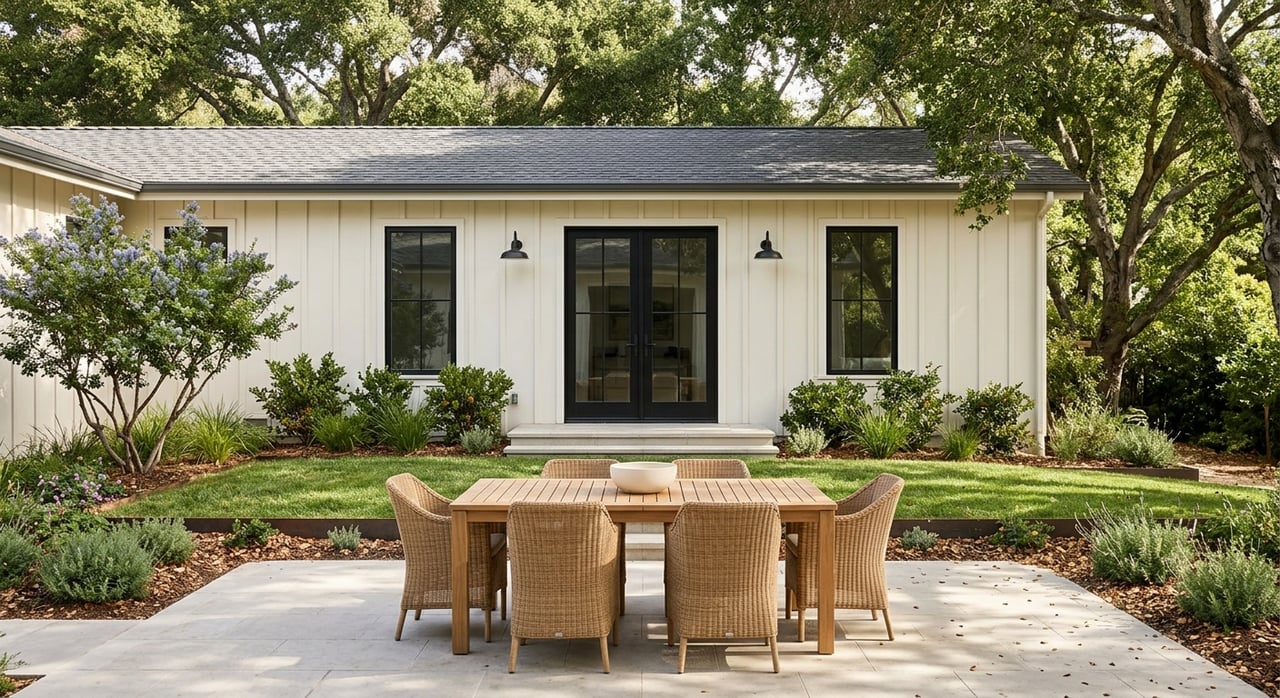
Thinking about Orinda? It often lands on Bay Area buyers’ short lists for one simple reason: it offers a distinct mix of hillside privacy, strong commuter access, and a housing stock dominated by detached homes. If you are comparing East Bay suburbs and trying to understand what daily life and the home search really look like here, Orinda deserves a closer look. This guide will help you understand the market, the layout, and the trade-offs so you can shop with more confidence. Let’s dive in.
Orinda has a distinct feel
Orinda is not a one-size-fits-all suburb. The city describes itself as semi-rural, with tree-studded hillsides, and that setting shapes both the look of the community and the way homes live from one area to another.
For you as a buyer, that means the details matter. Lot size, slope, privacy, and ease of access can change quickly depending on where you are, even within the same city. A home that feels close to downtown on paper may still offer a very different day-to-day experience than one tucked farther into the hills.
The housing mix also tells you a lot about the market. Bay East describes Orinda as 96.3% single-family detached housing, and the U.S. Census Bureau reports an owner-occupied housing rate of 91.3%. In practical terms, Orinda is a detached-home market first, not a mixed-housing market with many condos or townhomes.
What buyers should expect on price
If you are entering the Orinda market, it helps to set expectations early. Bay East’s March 2026 report shows a median sales price of $2,265,000 for detached single-family homes.
The same report shows about 2.2 months of inventory, an average of 12 days on market, and buyers paying 104% of list price on average. That points to a market where well-positioned homes can move quickly and competition can still be meaningful.
You may also notice that the Census Bureau’s estimated median owner-occupied home value, $1,863,200, is lower than the detached median sale price. That difference reflects the broader owner-occupied housing stock versus current detached-home sales. For your search, the detached sales data is often the more useful benchmark.
Commuting from Orinda
For many Bay Area buyers, Orinda’s commuter appeal is a major reason to look here. Orinda BART Station, located at 11 Camino Pablo, sits on the Antioch to SFIA/Millbrae line and offers weekday service from 5:00 a.m. to midnight.
BART also notes parking at the station, and County Connection serves as the local connecting transit provider. If you want a rail option for Oakland, downtown San Francisco, or airport-connected job centers, Orinda offers a practical setup.
Driving access matters too. Highway 24 is the city’s main east-west corridor, and city planning materials show nearby neighborhoods connecting back to SR 24 through streets such as Bryant Way, Southwood Drive, Overhill Road, and Glorietta Boulevard.
That does not mean every commute feels the same. Your day-to-day experience will depend on how close you are to BART, how directly your neighborhood connects to Highway 24, and whether your home sits on an easier downtown approach or a steeper hillside street network.
Downtown Orinda in simple terms
Downtown Orinda is compact and functional rather than urban and dense. The city says Highway 24 divides downtown into the Village District on the north side and the Theatre District on the south side.
For everyday living, that split helps buyers think more clearly about location. A home near downtown may offer easier access to errands, dining, and BART, but still feel very different depending on which side of Highway 24 you are on.
The downtown shopping and service pattern is centered around places like Village Square, Theatre Square, Country Club Plaza, and One Camino Sobrante. You will find practical daily conveniences and local dining, but not a large-scale retail district.
North Orinda versus south Orinda
One of the most important things to understand about Orinda is that micro-location matters. Buyers often talk about Orinda as one market, but the feel can shift meaningfully north or south of Highway 24.
North Orinda
North Orinda often matches the image many buyers already have in mind. Areas such as Sleepy Hollow can feel wooded, quiet, and tucked away.
The Sleepy Hollow neighborhood association describes the area as 470 homes across 600 acres just north of the freeway. That gives you a sense of the lower-density, more secluded setting many buyers come here for.
There are trade-offs. The Moraga-Orinda Fire District reports that large areas north of Highway 24 are in the Very High Fire Hazard Severity Zone, and many north-Orinda neighborhoods have narrow, steep, winding roads and heavy vegetation.
For you, that means north Orinda may appeal if you want privacy, atmosphere, and a more removed hillside setting. It may be less ideal if your top priority is the quickest, simplest in-and-out access.
South Orinda
South Orinda tends to feel more access-oriented in many areas. It also includes some of the city’s clearest school-adjacent locations.
The city identifies Del Rey as a south-Orinda neighborhood on a hill backing up to Moraga Country Club between Del Rey Elementary and Miramonte High. That kind of geography matters when you are weighing convenience, daily routines, and how connected you want to feel to nearby destinations.
South Orinda also includes Wilder, one of the city’s most notable newer-construction options. The city describes Wilder as a planned development at the southern end of Orinda with 245 home sites, more than 1,300 acres of open space, trails, and near-complete new-home construction.
If you are looking for a more recently built, master-planned environment, Wilder may stand out. If you prefer a more established neighborhood setting with a traditional Lamorinda feel, other parts of Orinda may fit better.
Schools and district structure
For buyers who are paying close attention to school districts, Orinda offers a relatively straightforward public-school structure. Orinda Union School District includes Del Rey, Glorietta, Sleepy Hollow, and Wagner Ranch elementary schools, along with Orinda Intermediate School.
The local public high school is Miramonte High School, which the California Department of Education lists in the Acalanes Union High School District with enrollment of 1,168 students for 2025 to 2026. For many buyers, the main takeaway is not a ranking claim. It is the fact that Orinda has a clearly defined public-school pipeline rather than a more fragmented district setup.
Location still matters. The city’s placement of Del Rey in south Orinda between Del Rey Elementary and Miramonte High is a reminder that neighborhood geography and school geography overlap closely here.
Outdoor access is part of the appeal
Orinda is not only about houses and commute routes. The city’s trail system is a meaningful part of its lifestyle appeal.
The city notes that Orinda received a Trail Town USA designation in 1996. It also highlights the de Laveaga Trail, the EBMUD trail at Wagner Ranch, the St. Stephen’s trail, and the Wilder trail network.
If you value easy access to outdoor space, that can be a major part of the draw. For many buyers, Orinda feels like a lifestyle purchase as much as a housing decision.
Is Orinda the right fit for you?
Orinda tends to work best for buyers who want a high-value detached-home market with a residential feel, commuter access, and strong outdoor appeal. It is especially worth a close look if your priorities include hillside privacy, room to spread out, and access to BART.
It may require more careful comparison if you want denser walkability, a broad range of attached housing choices, or a lower entry price point. Because the market moves quickly and inventory can be limited, clarity on your priorities matters before you start writing offers.
A smart Orinda search usually starts with a few practical questions:
- Do you want easier BART and Highway 24 access, or more privacy and separation?
- Are you comfortable with a hillside setting, steeper roads, and more vegetation?
- Do you want an established neighborhood or a newer planned development like Wilder?
- How important is proximity to downtown services and everyday errands?
- Are you shopping primarily for detached-home living rather than attached options?
When you answer those questions clearly, Orinda becomes easier to navigate. Instead of treating the city as one uniform market, you can focus on the specific pockets that best match your lifestyle and goals.
If you are considering a move to Orinda and want grounded, local guidance on where to focus, The Beaubelle Group offers discreet, high-touch support for buyers throughout Lamorinda and the surrounding East Bay.
FAQs
What type of housing is most common in Orinda for buyers?
- Orinda is primarily a detached-home market. Bay East describes the city as 96.3% single-family detached housing, and the Census Bureau reports a very high owner-occupied housing rate.
What should Bay Area buyers expect from Orinda home prices?
- Bay East’s March 2026 report shows a median sales price of $2,265,000 for detached single-family homes in Orinda, with limited inventory and homes often selling above list price on average.
What is commuting from Orinda like for Bay Area professionals?
- Orinda offers access to Highway 24 and has a BART station on the Antioch to SFIA/Millbrae line, which gives many buyers a practical rail option for Oakland, San Francisco, and other connected job centers.
What is the difference between north Orinda and south Orinda for homebuyers?
- North Orinda often offers a more secluded, wooded setting, while south Orinda can feel more access-oriented and includes areas like Del Rey and the newer planned development of Wilder.
What should buyers know about Orinda schools and district boundaries?
- Orinda has a clearly defined public-school pipeline through Orinda Union School District for elementary and middle school, with Miramonte High School serving as the local public high school in the Acalanes Union High School District.
What lifestyle benefits does Orinda offer beyond housing?
- Orinda is known for its trail access and open-space feel, with the city highlighting routes such as the de Laveaga Trail, Wagner Ranch trail access, St. Stephen’s trail, and the Wilder trail network.